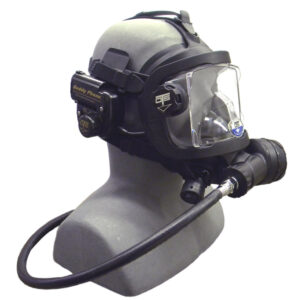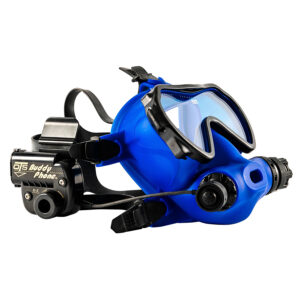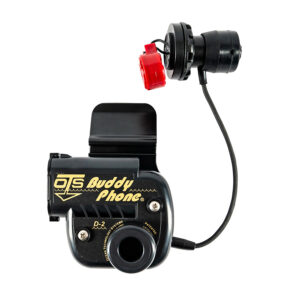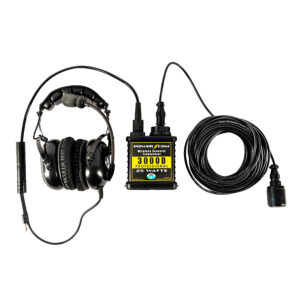
Through-water voice communications uses the water to carry the signal much like the way dolphins use sonar to communicate. Terms such as wireless, sonic, ultrasonic, or acoustic are interchangeably used for this concept. Through-water communications differ greatly from hard-wire underwater communications, which relies on a cable to carry the transmission to and from the diver(s).
To exemplify the difference between the two, picture the hard-wire communications as a land line telephone and the through-water communications as a cell phone.
While both of these devices achieve the same goal, external factors can sometimes affect the quality of cell phone usage due to dropped calls or static interference that land lines do not experience. On the other hand, billions of people enjoy the freedom of cell phone mobility that is impossible with a land line telephone.
Through-water communications are a fun and easy way to explore the underwater world. Our products are available in different ranges and power levels depending on your need. See our through-water product list for more details on through-water communications.
Who Uses Through-Water Communications?
- Sport/Recreational Divers
- Videographers
- Photographers
- Directors
- Film and T.V.
- Tour guides
- Search and Rescue Teams
- Commercial Divers
- Military
Is this right for me?
If you want the freedom of communicating without being tethered to a rope, then through-water communications is just the thing for you. With through-water communications you will have the mobile freedom to swim and explore wherever you want, wireless diver-to-diver, or diver to top-side.
Through-Water Products:
- All Buddy Phone Products
- 2 Channel Buddy Phone
- RX- 100 Receive Only Unit
- SP- 100 D2 Surface Station
- SSB-2010 4 Channel Diver Unit
- SSB- 2001 2 Channel Diver Unit
- CDK-6 Surface Conversion Unit